
Free AI Homework Help: How to Learn Smarter Without Paying a Cent
Stuck on a problem at 11 p.m. with no tutor in sight? Free AI homework help puts a patient, always-on study partner in your pocket — one that walks you through each step instead of just handing over an answer. According to Harris Cooper’s synthesis of homework research published by Duke Today, homework itself genuinely improves achievement for secondary students, so getting unstuck quickly matters more than it might seem.
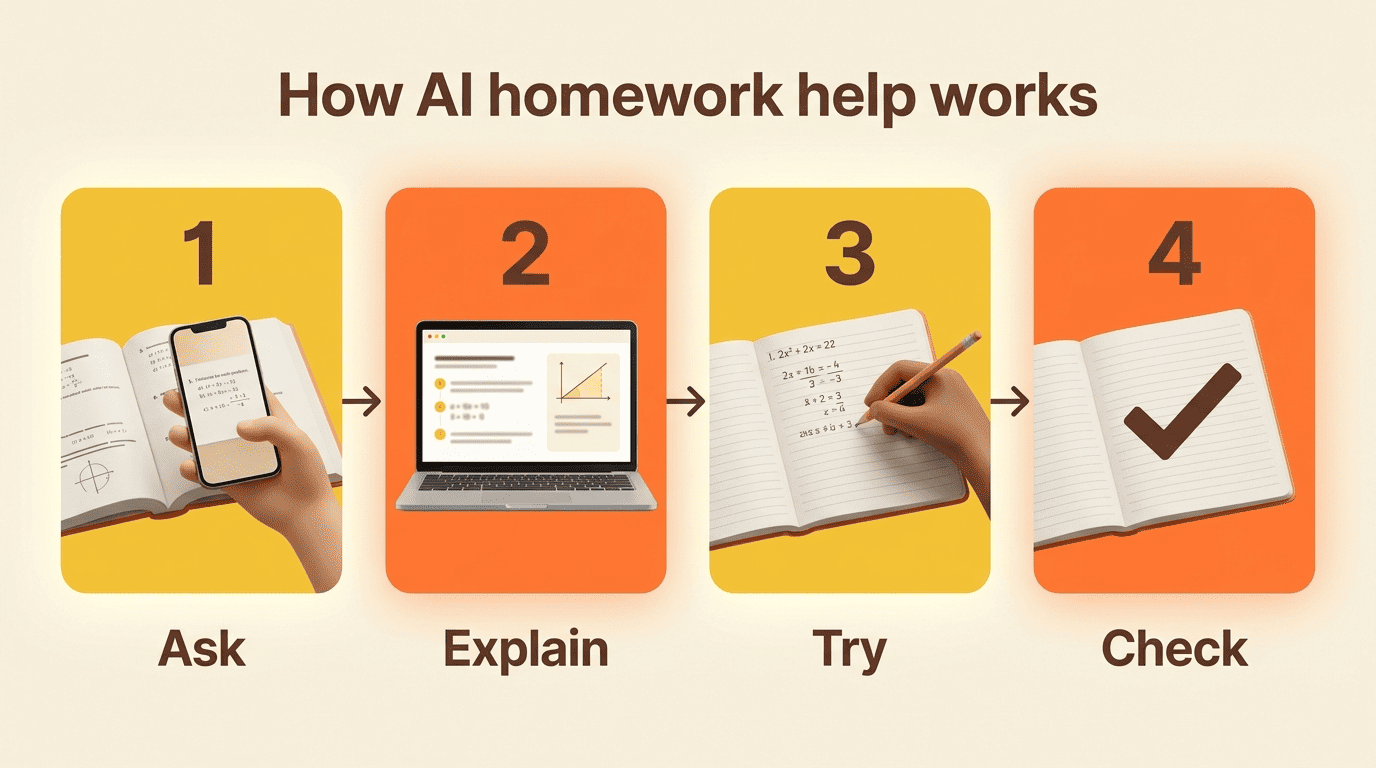
Kai, the AI powered homework help assistant, is built to help you understand the work — reading your question, explaining the reasoning, and checking what you’ve already done. The goal isn’t a finished worksheet; it’s a brain that actually learned something.
Is There Really a Free AI Homework Helper?
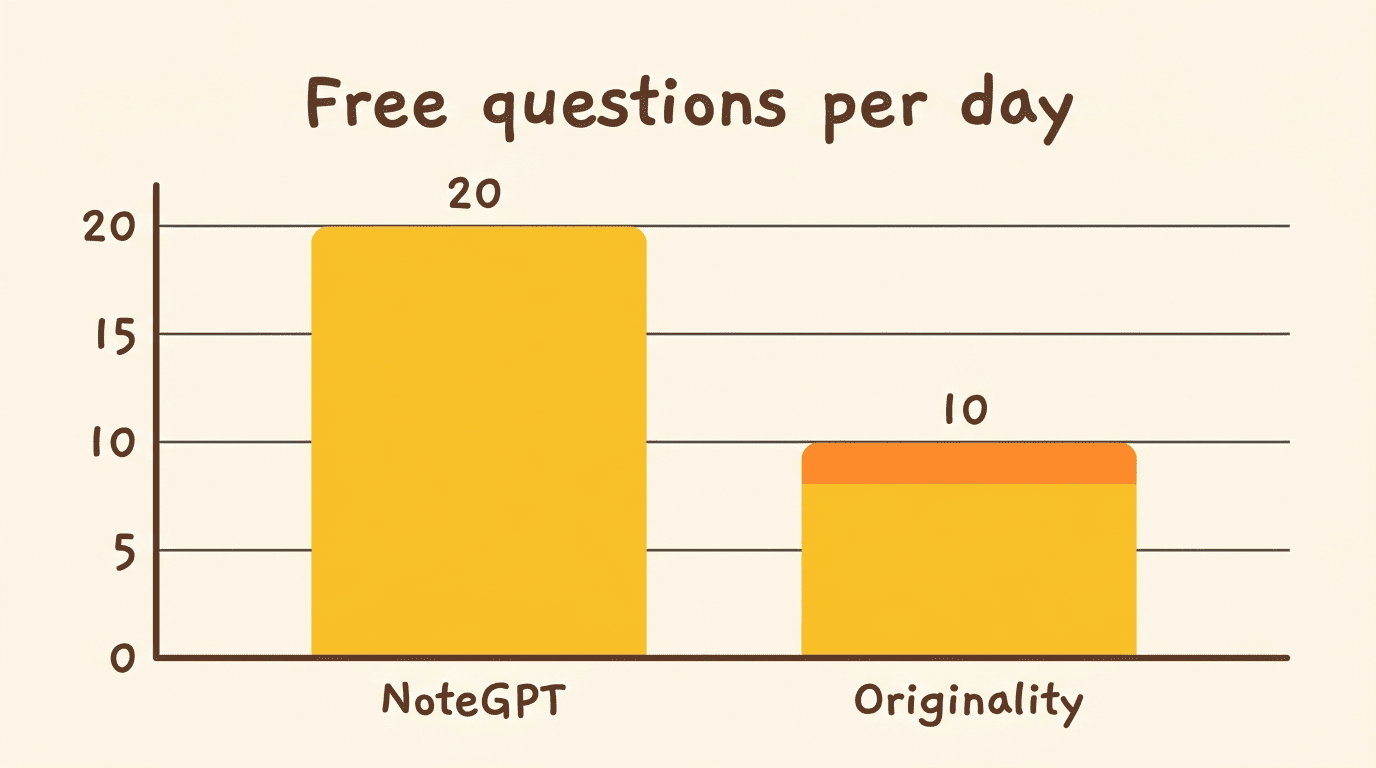
Yes — several AI homework helpers give students a real free tier, not just a trial. NoteGPT offers 20 free tries per day with no sign-up required. Originality’s homework tool caps free users at 10 uses per day. StudyMonkey runs 24/7 and typically answers in around 10 seconds. None of these are marketing fluff — they’re functional daily allowances that cover a normal study session.
The trade-offs are worth knowing before you rely on any of them:
- A daily cap on the number of questions or uploads
- Watermarks or ads nudging you toward a paid plan
- Advanced or niche subjects sometimes locked behind premium
- Saved question history often requiring an account
- Response quality that can dip on multi-step or unusual problems
Most students never hit the daily limit unless they’re cramming for several classes at once.
What «free» actually includes
| Tool | Free limit | Sign-up required | Response time |
|---|---|---|---|
| NoteGPT | 20 tries/day | No | Seconds |
| Originality | 10 uses/day | No | Seconds |
| StudyMonkey | Unlimited (rate-limited) | No | ~10 seconds |
| Kai (AI powered homework help) | Free daily access | No | Seconds |
No sign-up and privacy
Many of these tools work anonymously — you open the page, type your question, and get help without creating an account. That lowers friction, but it comes with a catch: saved question history and test-review features usually require a login. Kai’s approach leans understanding-first — there’s no pressure to hand over personal data just to get a concept explained.
How AI Powered Homework Help Works, Step by Step
Free AI homework help online follows a predictable pattern once you’ve used it a couple of times. You give it a question in whatever format you have, it reads and interprets that input, and it returns an explanation you can actually follow — not just a final number.
- Type your question directly, or snap a photo or upload a PDF — OCR reads both handwritten and typed work.
- The assistant processes the problem and identifies what’s actually being asked.
- It returns a step-by-step explanation instead of a bare answer.
- You review the reasoning and ask follow-up questions if something doesn’t click.
- For practice, you attempt a similar problem on your own.
- The assistant checks your attempt and points out where the logic went off track.
- You repeat with a new problem until the method feels automatic.
From question to understanding
The core move is simple: type your question or snap a photo or PDF, and OCR reads both handwritten and typed work. The assistant then returns a step-by-step explanation rather than just the final number, breaking down each move so you can see where a fraction got flipped or a formula got misapplied. The best part is the follow-up loop — you can keep asking «why» until the concept actually clicks, the same way you’d interrupt a human tutor mid-explanation.
It should explain, then let you try
A good AI homework helper works like a tutor, not an answer key. It shows the method on one example, then hands you a similar problem and asks you to solve it yourself. This retrieval-and-practice loop — explain, attempt, correct — is closer to how memory actually forms than passively reading a finished solution. Skipping the «you try it» step is the difference between homework help and homework replacement.
Which Subjects and Grade Levels Are Covered?
Coverage on most free AI homework helpers is broader than students expect. StudyMonkey alone lists over 100 subjects, spanning levels from 1st grade through university and even Masters-level coursework.
From elementary math to college essays
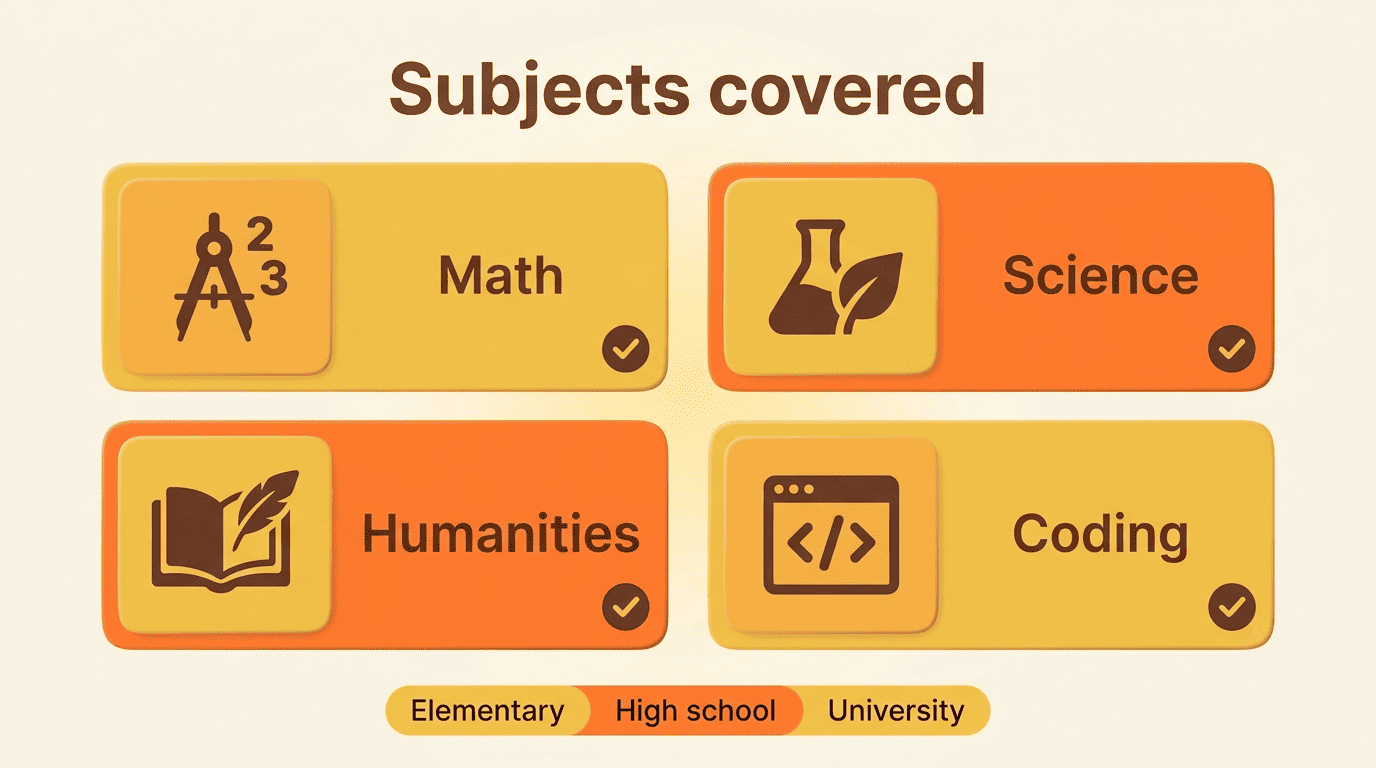
Subject coverage typically breaks down like this:
- Math — algebra, calculus, geometry, statistics
- Science — biology, chemistry, physics
- Humanities — literature, history, foreign languages
- Coding — Python is the most common request
AI performs strongest on structured, rule-based subjects like math and the sciences, where a problem has a defined method and a checkable answer — which is why dedicated AI science homework help tends to feel especially reliable.
Humanities work needs a different level of trust. Essay analysis, historical interpretation, and anything involving current events benefit from AI as a first draft or study aid, but the nuance and source-checking still belong to you. Cross-referencing a literature interpretation or a historical claim against your textbook or a teacher’s notes is worth the extra few minutes.
| Grade level | Typical strength | Where to double-check |
|---|---|---|
| Elementary (1st-5th) | Arithmetic, basic reading comprehension | Handwriting/OCR misreads |
| Middle school (6th-8th) | Pre-algebra, general science | Multi-step word problems |
| High school (9th-12th) | Algebra, geometry, chemistry, physics | Essay nuance, source citations |
| University / Masters | Calculus, statistics, coding | Discipline-specific methodology |
Is Using AI for Homework Cheating?
Not inherently — the line depends on what you do with the output, not on whether you opened an AI tool at all.
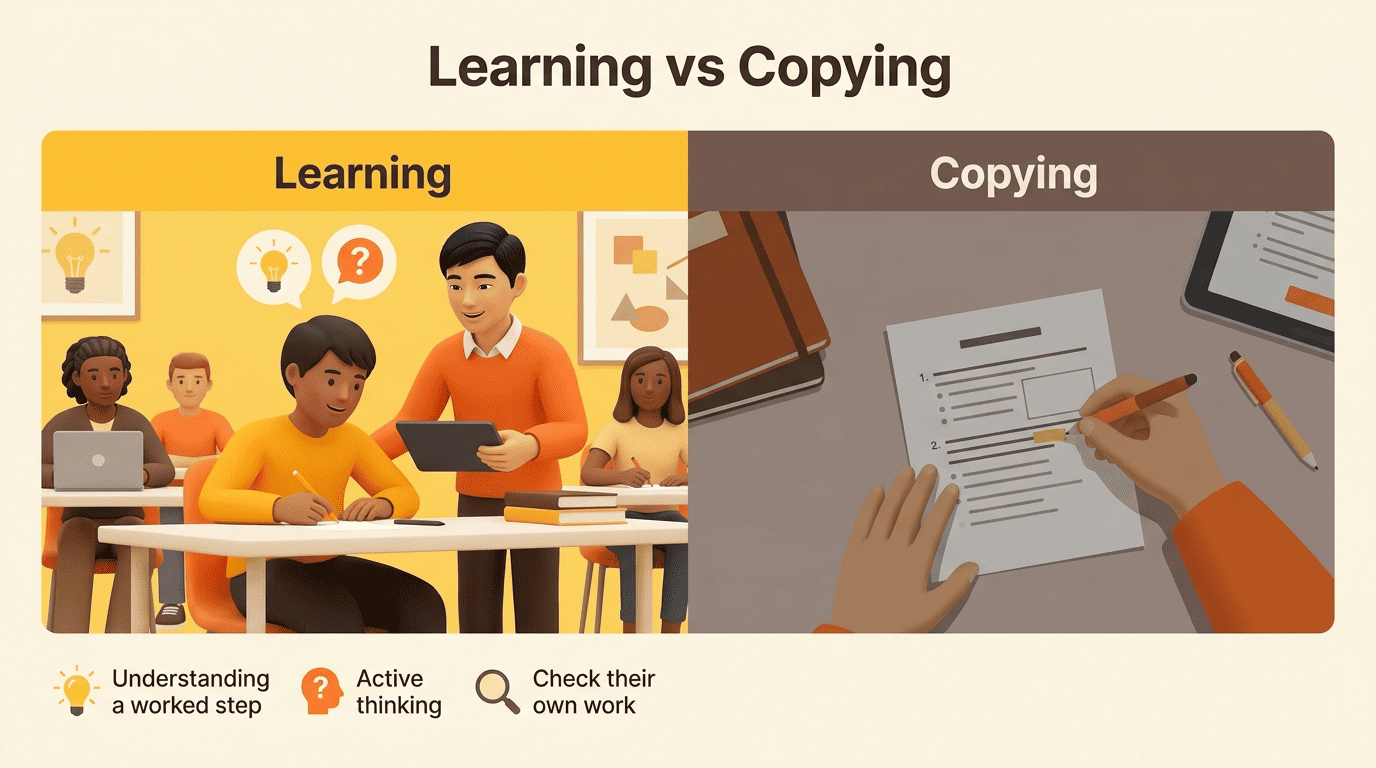
The line between learning and copying
Using AI to explain a concept, quiz yourself, or find where a mistake happened is learning. Pasting its answer into a worksheet and submitting it as your own work is not. As Originality.AI frames it in its homework-helper guidance, «It isn’t about finishing an assignment faster; it’s about learning smarter.»
A quick gut check for where a specific use falls:
- Learning: asking it to explain a step you got wrong, quizzing yourself on material you already studied, checking your own solution before submitting
- Not learning: copying a generated answer straight into your homework, having it write an essay you submit as your own, skipping the explanation and just taking the final number
It isn’t about finishing an assignment faster; it’s about learning smarter.
Originality.AI
That framing lines up with official guidance too. UNESCO’s guidance for generative AI in education and research takes the position that AI should serve human capabilities, not replace them — a humanistic approach built around protecting student agency. Most university academic-integrity offices, like Duke’s Office of Student Conduct, draw a similar line: unauthorized AI use on a submission is misconduct, while AI use a professor has approved for understanding the material is not. Policies vary by school and even by teacher, so it’s always worth checking your instructor’s specific rules before you open any AI tool for an assignment.
How Kai keeps you honest
Kai is designed around explaining and checking, not ghost-writing. It walks through the reasoning, asks you to attempt the next step, and flags where your own work goes wrong — positioning it as a study partner that helps you own the material for the test, for the moment when no AI is in the room to bail you out.
Does Homework Even Help? What the Research Says
It’s a fair question, and the research answer is a qualified yes. Harris Cooper’s widely cited synthesis of homework studies, summarized by Duke Today, found that homework positively affects achievement for students in grades 7 through 12.
Why smart practice beats busywork
The same research points to a widely used rule of thumb — roughly 10 minutes of homework per grade level per night — meaning a middle schooler in 7th or 8th grade lands around 70-80 minutes. Cooper’s synthesis is explicit that piling on more doesn’t help: «even for high school students, overloading them with homework is not associated with higher grades.» Quality of practice matters more than sheer volume, a point echoed in the American Psychological Association’s coverage of homework and student outcomes. Free AI homework help fits neatly into that finding: by making the «getting unstuck» part faster, it leaves more of that limited study time for the recall and practice that actually build memory.
Using Free AI Homework Help for Test Prep
Beyond one-off questions, these tools double as a lightweight study system heading into an exam.
Turn solved problems into a study set
Have the assistant quiz you instead of just answering questions. A quiz-me mode flips the usual flow — instead of you asking and it answering, it asks and you attempt, which surfaces gaps before test day rather than during it.
Ask it to explain every wrong answer, not just mark it incorrect. The explanation is where the actual learning happens; a bare «incorrect» tells you nothing about the fix.
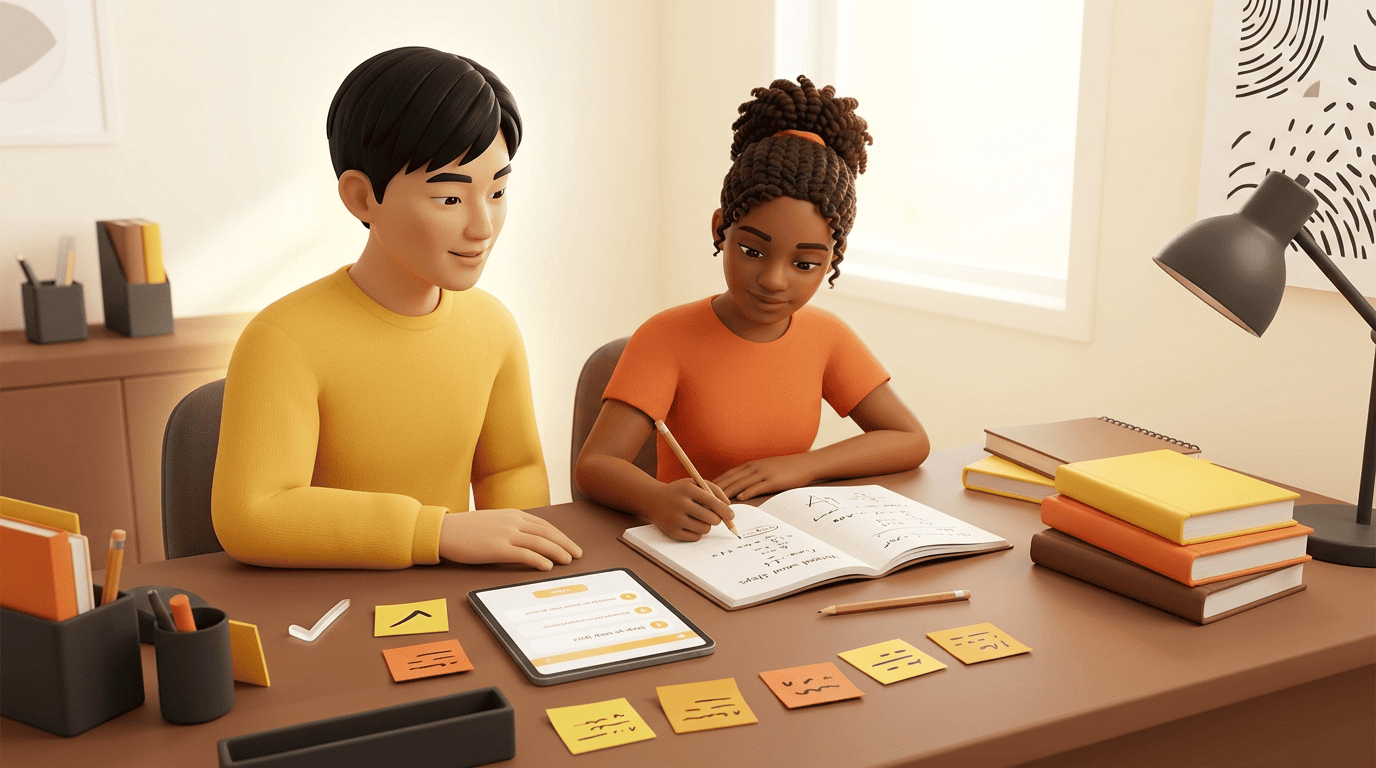
Use saved question history to review before an exam. Revisiting problems you’ve already worked through — and rebuilding the method from memory rather than rereading the solution — is where AI homework help online earns its keep as more than a quick-answer tool.